Every August, when the United States Senate is in recess, I get a whole month to leave the chaos of Washington behind and come back home to Nevada and heal my soul. I get to spend quality time with Nevadans all across the state, from Las Vegas to Carson City to Elko and everywhere in between.
Traveling around Northern Nevada gives me an important opportunity to hear from workers, business owners, and families about the issues that matter to them andhow we can come together to find solutions.
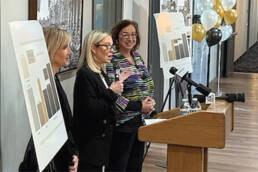
In early August, I attended the 29th Lake Tahoe Summit, speaking with community members, re- searchers, scientists, other elected representatives, tribe members, and officials dedicated to keeping the Tahoe Basin clean and preserved for future generations.
This annual event is a time for us to celebrate
the work we’ve done, like passing the Lake Tahoe Restoration Act reauthorization through Congress last year so we can continue investing in improved infrastructure around the lake. But, it’s also all about the work we still have ahead of us to maintain the basin and get local residents the resources they need. We discussed the ways to support our firefighters in the incredible work they do to combat wildfires. We also had productive conver- sations about Tahoe’s outdoor recreation economy and how to continue to encourage more visitors in a sustainable and responsible manner.
We still have work to do, and coming together with the Tahoe community at the summit was a vital step in that process.
I also had the opportunity in August to visit some hospitals in rural counties throughout Nevada. In Winnemucca, I met with health care providers at Humboldt General Hospital, and in Lander County, I spoke to representatives from Battle Mountain General Hospital. Unfortunately, due to this administration’s cuts to Medicaid, there are serious concerns about rural hospitals’ ability to maintain their services and care for all their patients.
Rural hospitals need more resources than ever to keep Nevadans healthy, but instead, this administration and Congressional Re- publicans just passed legislation to cut those resources. Despite this setback, I’m never going to stop advocating for rural hospi- tals and for Nevadans’ health care at the federal level.
Another important topic I continued to discuss with Nevadans this August was the progress on the new veterans’ cemetery in Elko. I was proud to secure Department of Veterans Affairs approval for the Elko National Cemetery in 2022, and now, I am committed to seeing it through.
In July, I voted with my Republican colleagues to confirm Sam Brown to serve as the Veterans Affairs Undersecretary for Memorial Affairs, optimistic that his ties to Nevada will encourage him to make sure the cemetery is completed. Currently, the closest veterans’ cemetery for the Elko region is over 200 miles away, either in Fernley or in Salt Lake City, Utah. That’s why I’m urging Undersecretary Brown to provide an update on the timeline for construction and completion of this critical project. Veterans in Elko and the surrounding area deserve some good news, and I hope to be able to deliver it to them soon.
Issues like building the new veterans’ cemetery, expanding access to health care, improving infrastructure and broadband, investing in small businesses, ensuring law enforcement can keep our communities safe, supporting farmers and ranchers, and preparing our students for the workforce are all on Nevadans’ minds, and that’s what I spoke about with Nevadans in every corner of our state this month.
I will always fight for the Silver State’s needs in the Senate, and I encourage any Northern Nevadans with federal issues to reach out to my office at cortezmasto.senate.gov or (775) 686-5750. Whether I’m home in Nevada or in Washington, I’m listening.
In Reno, the Senator’s Office:
400 South Virginia St., Suite 902 Reno, NV 89501 Telephone: 775-686-5750 Fax: 775-686-5757 Rural Nevada Office: 775-225-1457