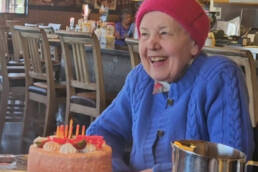
I am focusing on death this month because I have experienced the death of a couple of old friends and one woman, Shirley, that I adopted five years ago through an AARP Age Friendly program that we developed in Reno. We called isolated alone seniors weekly and Shirley was one of those. She turned 90 and her physician gave her 2 weeks to live and she lasted about 4-5 months. She lived a beautiful life.
Death occurs in all living organisms. The state of human death has always been obscured by mystery and superstition, and its precise definition remains controversial, differing according to culture and legal systems. Dia de los Muertos, Day of the Dead, is celebrated on Nov. 1st and 2nd by Mexicans and is quite joyous. Day of the Dead respectfully celebrates and honors the dead every year through joyful and colorful cultural tradition that embraces death as a natural part of the human experience, rather than a somber or fearful event. Rather than focusing on loss and sorrow, Day of the Dead is a celebration of life and the connections that endure beyond death. It is a time for joy, laughter and appreciation of the preciousness of life.
Death can be viewed from various perspectives, including biological, historical, and cultural. Defining death biologically involves considering the irreversible loss of essential functions at the physiological, molecular, or genetic level. From this perspective, death is not a sudden event but a process.
Various journals now not only list the dead but also describe what they died of, at times in some detail. They openly discuss subjects considered too delicate or personal less than a generation ago. Television interviewers question relatives of the dying, or even the dying themselves, and films depict murders or executions in gruesome and often quite accurate detail. Death is no longer enshrined in taboos.
Culturally, perceptions of death vary, influencing beliefs about the soul’s departure and the afterlife. Historically, societies have developed diverse customs and rituals surrounding death, reflecting different religious beliefs and philosophical ideas, as Dia de los Muertos has for 3,000 years.
In the U.S. modern medicine has defined death as the irreversible cessation of brain function, especially the brain stem, which controls breathing and consciousness. This definition is crucial
for ethical considerations, especially in organ transplantation, where organs are removed from brain-dead individuals. The determination of death is a complex issue with legal and ethical implications.
What really happens at death? Why do we even have to die? Can we actually know whether there is life beyond the grave? Where can we go for meaningful, believable answers? Only the creator of life can reveal its purpose and the state of the dead. Many people of various religions point to God for answers to our questions and we can learn a lot about both life and death through these religious leaders.
Human beings have been the only species to bury their dead in a systematic way, often with implements to be used in a further existence. The study of death rites and customs illustrates impressively the relation between religious belief and popular practice in the presence of the dead. Such an approach starts from the meaning of death in various historical cultures in which only a shadowy of afterlife or no afterlife at all was envisaged
Is death the end of human existence and consciousness, or do we continue in some other place or state of being? Do we go to a place of everlasting reward or eternal torment? Are we destined to be reincarnated, coming to life again in a different body in a seemingly endless cycle of living and dying? Will we ever see deceased loved ones again? Many religions tell us what happens to those who have done right (will they go to heaven?) and wrong (or be tormented in an ever-burning hell?) and reveals the fate of the billions of people who have never known God and his way of life. Most churches claim to teach what the Bible says, but what does it really reveal? Perhaps those who have died are unconscious, as if they are sleeping a dreamless sleep, awaiting their time to be called out of the grave and resurrected to a new life.
Many people, however, believe in a perpetual, ever-burning hellfire or a condition of spiritual torment in which evil people are tortured throughout eternity. But the Bible’s simple teaching conveys nothing like this. Understanding the meaning of life, death and what follows this physical life can give priceless comfort and hope in the face of death. It should also have a great impact on the kind of person you are, motivating you to live carefully and make wise choices.
The general acceptance of death has been subverted by the advances of modern medicine and by the rapid spread of rationalist thought. This led, during a period of only a few decades, to a striking change of attitudes. In advanced industrial countries, alarge number of people now die in hospitals. The improvement in life expectancy and the advances of modern surgery and medicine have been achieved at a certain price. A mechanistic approach has developed, in which the protraction of dying has become a major by-product of modern medical technology. Instead of perceiving death as something natural, physicians have come to see it as bad and at times as a defeat. Sickness is treated with all possible weapons without any thought whether there is still a person. Clearly, we are focusing on the physical form of the human and reevaluating death from our earlier conceptions.
One area that has developed that helps in the treatment of the dying, not necessarily answering the question about life after death, is hospice. In fact, the Circle of Life Hospice has even provided the first Hospice Guest House which is in Reno, gifted by myself, which is the first in Nevada, what better way to add life to years.
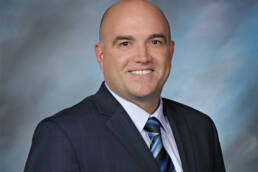
Lawrence J. Weiss, Ph.D. is CEO of the Center for Healthy Aging. Dr. Weiss welcomes your comments on this column. Write to him at larryjweiss@gmail.com or c/o Center for Healthy Aging, 11 Fillmore Way, Reno, NV 89519.